Chapter 2 of 8
4 min read
Why SEO Is Different for Coaches and Consultants
Coaches sell transformation. Not software, not physical products, not subscription boxes. Personal transformation: how people see themselves, how they show up in the world, how they build lives that feel like theirs. That distinction changes everything about how search content needs to work for coaching businesses.
Most SEO providers treat coaches the same as e-commerce or SaaS companies. Same content playbook, same keyword-first approach, same generic output. The approach fails because coaching operates at a deeper level.
The content has to match that depth, or it signals something worse than inexperience. It signals inauthenticity to the exact people you want to reach.
Key Points:
- Coaching content operates at the level of identity and self-conception, not product features
- Generic content actively undermines a coach's credibility with the people they most want to reach
- Voice capture before content production is the step most agencies skip
- Your intellectual property is the content differentiator, not keyword volume
Why Is Coaching Content Fundamentally Different?
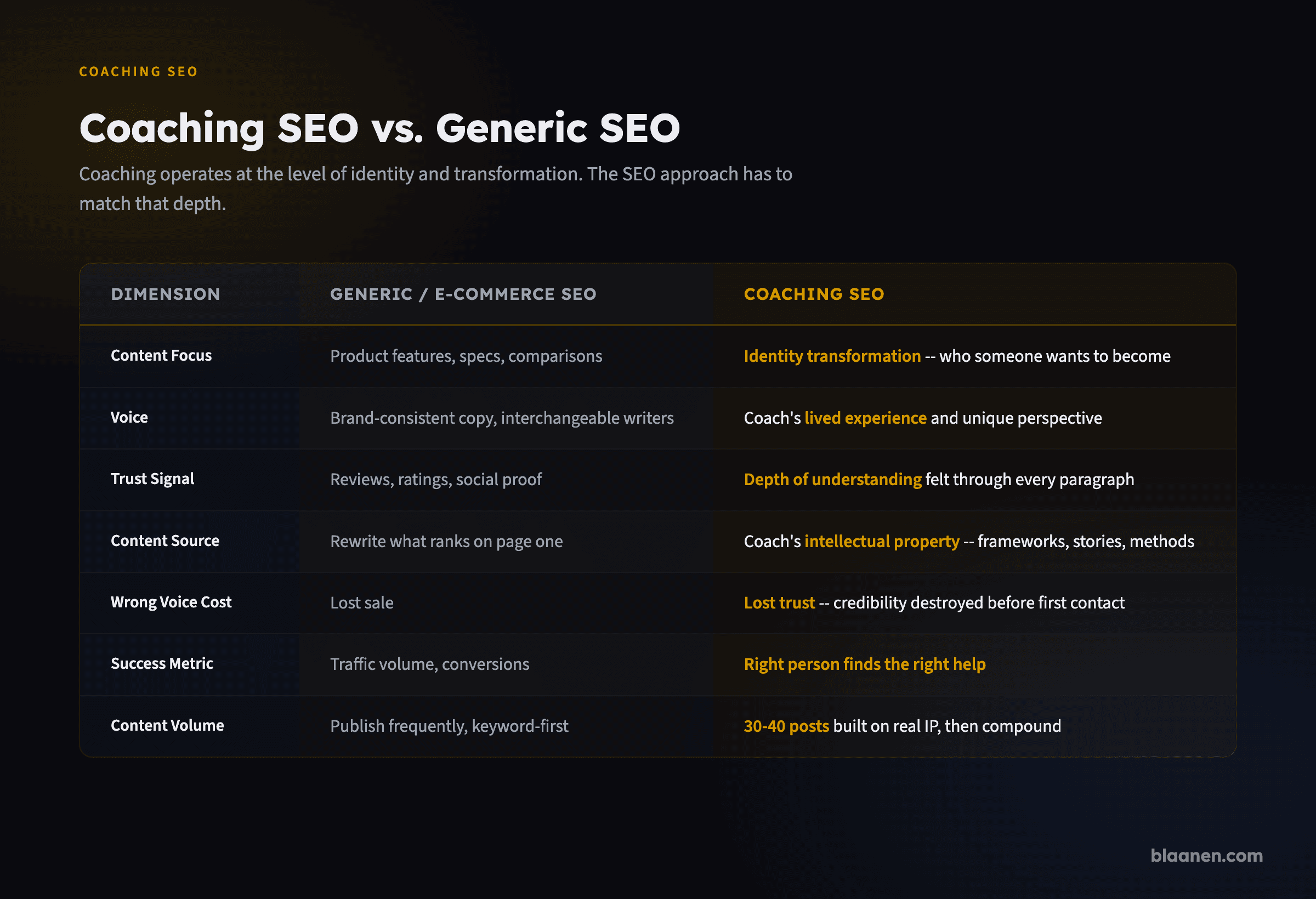
Coaching is personal development transformation: how people see themselves, how that emanates into the world. E-commerce content compares features. SaaS content quantifies ROI. Coaching content speaks to who someone wants to become. Those are entirely different languages.
A leadership coach writing about executive presence is not listing product specifications. They are describing a shift in how a person carries themselves through high-stakes moments. That requires nuance, emotional precision, and lived experience behind every word.
Getting the voice wrong on a product page costs you a sale. Getting the voice wrong on a coaching page costs you trust. Search visitors evaluate your credibility through your content before they ever reach out (how trust works across channels).
The people searching for a coach are evaluating whether this person understands them at a level that matters. They are looking for evidence of real depth, not polished marketing copy.
What Happens When Coaches Publish Generic Content?
Generic listicle content does not just fail to rank for coaches. It actively undermines their credibility. When a coach with 25 years of experience publishes a blog post that reads like a ChatGPT prompt with their name on top, the message is clear: this person is doing content marketing, not sharing expertise.
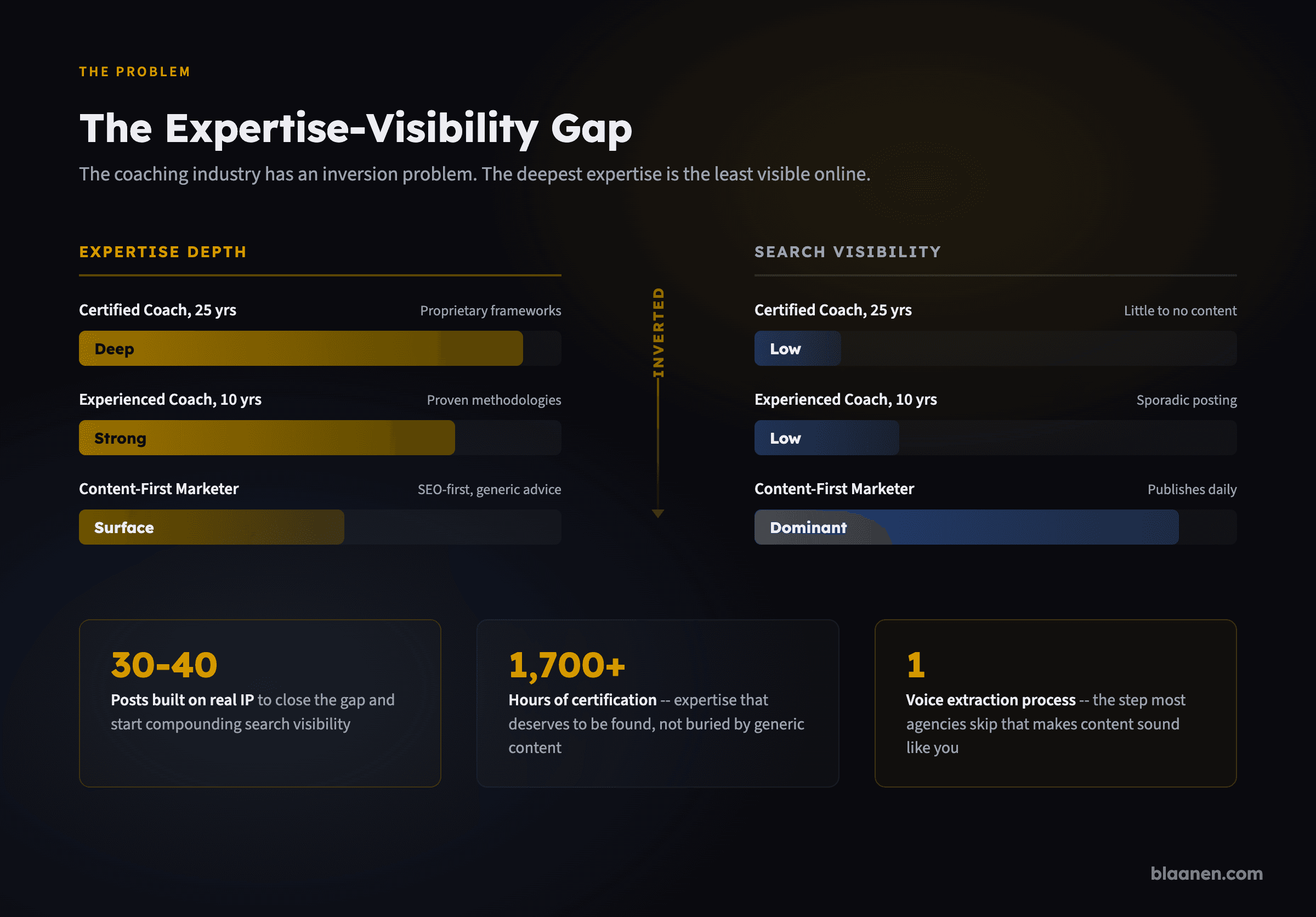
The coaching industry has an inversion problem. The people with the deepest knowledge and the most transformative methodologies are often the least visible online. The people who figured out content marketing first dominate search results, regardless of actual depth.
This is not just unfair to coaches. It is harmful to the people searching for help. When someone searches for the right executive coach, the answer should come from someone who has done the work. Not from whoever published the most blog posts.
If you are not sure whether your business is even ready for SEO, that is worth evaluating on its own.
What Does the Content Treadmill Feel Like?
The content treadmill is what happens when coaches follow the standard advice: post on social media every day, send 50-100 DMs daily, and create content constantly with no clear framework.
Why the Treadmill Breaks Down
Most coaching programs teach the craft of coaching well. They do not teach how to build a coaching business. I experienced this firsthand. During my Robbins-Madanes coaching certification (1,700+ hours), the guidance for finding clients was "go out there and try everything." That is not a strategy.
I sat there writing content every day. It was exhausting. When results did not come, there was no framework for iterating, no way to know what to change. The program prepared me to transform lives. It did not prepare me to get found by the people whose lives I could transform.
That experience is exactly why this work exists. The treadmill is real. Most coaches either burn out on it or conclude that online visibility does not work for coaching businesses. Neither conclusion is accurate. The problem was never the medium. It was the absence of a system.
Why Can't Most Agencies Capture a Coach's Voice?
Agencies write about topics. Coaches need content written from their perspective, not about their perspective. That gap is the reason most agency relationships end in frustration for coaching clients.
A coach's intellectual property, including frameworks, stories, hard-won lessons, and real client experiences, is what makes content worth reading and worth citing. Generic content covers the topic without carrying the coach's perspective.
A leadership coach with a proprietary assessment methodology needs content that reflects that methodology. Not a rewritten version of what competitors published last month.
A structured voice extraction process captures what makes each coach's perspective unique (the brand brain). Without that extraction step, you get content that could belong to anyone. Content that could belong to anyone builds trust with no one.
What Do Coaches Actually Need from SEO Content?
Coaches need content built on their intellectual property, not rewritten versions of what already exists on page one of Google. The content differentiator for a coaching business is the coach's expertise: original frameworks, real stories, and a specific perspective on transformation.
You need 30-40 published posts before search visibility starts compounding, and each one needs to carry the coach's voice, IP, and particular understanding of the problems they solve.
The goal is not traffic for its own sake. The goal is the right people finding the right help. When a coach's content ranks, when AI systems cite their perspective, the people searching for that specific kind of transformation can find the person best equipped to guide them.
When that happens, it is not just traffic. It is the right match between someone who needs transformation and someone who can deliver it. That is what makes coaching SEO different. The stakes are personal, and the content has to be personal too.
The Expertise-Visibility Gap Is Solvable
Coaching SEO is different because coaching itself is different. The language is more personal. The trust threshold is higher. The voice has to carry real experience, not borrowed authority.
My coaching background (1,700+ hours of certification, firsthand experience with the content treadmill, years of working specifically with coaching businesses) informs every part of how I approach this work. The expertise-visibility gap is solvable.
It requires a process that starts with the coach's real IP and builds content that sounds like them, because it comes from them. That process is what turns invisible expertise into search visibility that compounds over time.
If that resonates, start with the brand brain process, see how the full process works, or get in touch directly.
Ready to explore what this looks like for your business?